The project
«How does Cibel work?»
When the stones speak. Verified stories. In situ.
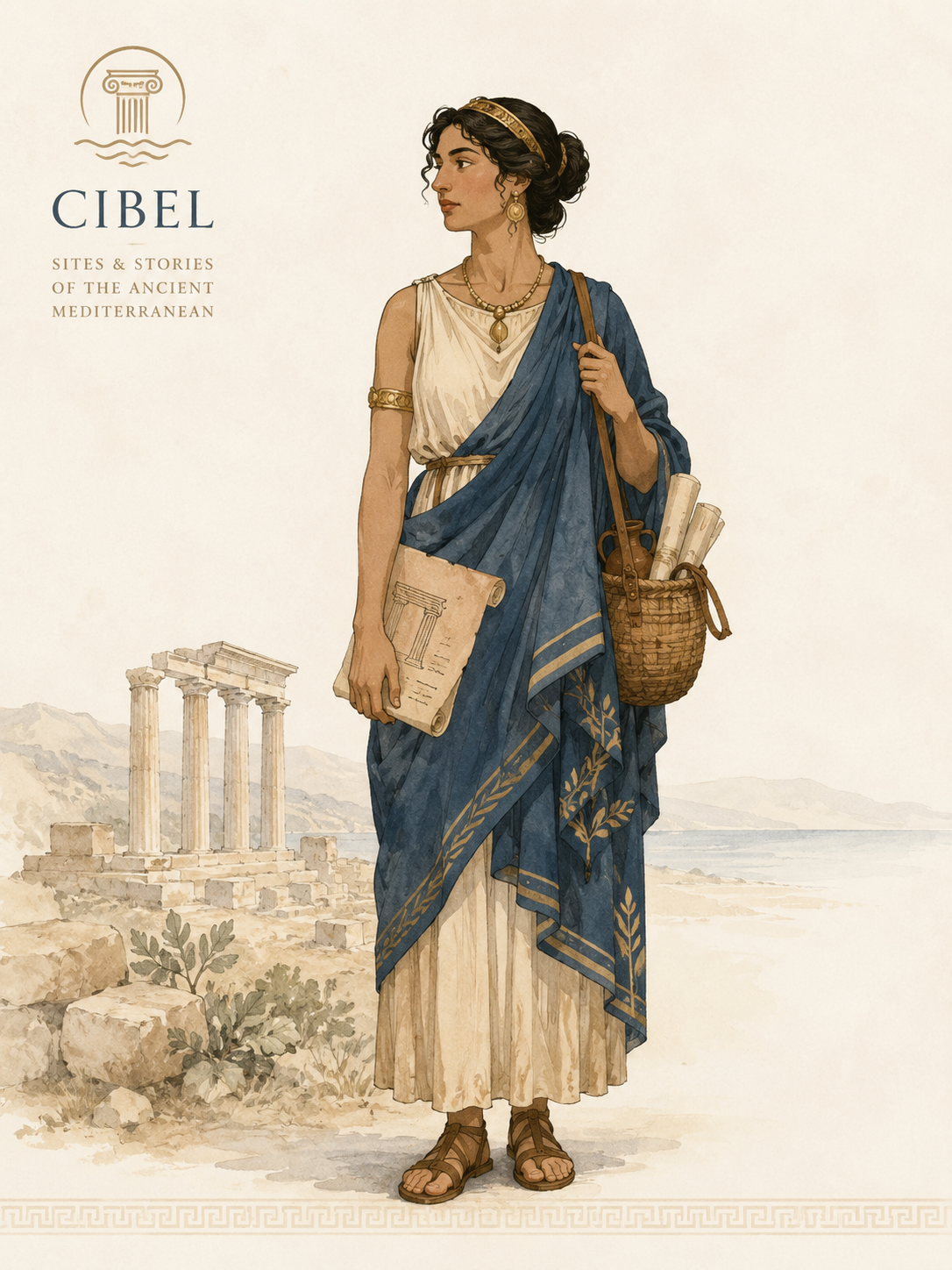
When the stones speak. Verified stories. In situ.
«Three thousand years of the Mediterranean in a single conversation. I'm here — ask me anything you'd like to know about Cibel.»
«How does Cibel work?»
«Why are you called Cibel?»
«Which voices speak for you?»
«Can I listen to one right now?»
«What makes you different?»
«How does one become a partner?»
◆ Cibel's answers are anchored in her verified archive. When she doesn't know, she says so.
Vibia Galla, priestess of the imperial cult at Aquinum, is Cibel's first living voice. She speaks five languages, knows every stone of her site, and is waiting for you.
Open-air archaeological sites are deserts of mediation. Not a panel, not a guide, not an audio track: only stones, waiting.
Cibel gives those stones a voice — not through invention, but through an archive. Every answer is anchored in institutional sources. When the voice doesn't know, it says so.
A Mediterranean route, built one site at a time.
Aquinum
sacerdos divae Augustae
A priestess of the imperial cult at the Central Baths. She speaks five languages. She knows only what the inscriptions say.
Eumachia
«priestess of Venus, patron of the Pompeian Forum»
We are building the narrative voice of Pompeii with our institutional partners. An entire city telling its own story through frescoes, shopfronts and electoral graffiti.
Priestess of Hera Argiva
«voice of the great mother of the Doric temples»
A voice for the temples of Hera and Poseidonia. In development with the Parco Archeologico di Paestum e Velia, anchored in the memory of the Achaean colony.
Scribonia Attice
«midwife of the port of Rome, voice of births»
Merchants, sailors, booksellers and Eastern cults in a city by the sea. A Mediterranean voice for the harbour that fed the Urbs.
Vibia Sabina
«the Augusta who lived inside Hadrian's dream»
A voice for Hadrian's villa-world: the Canopus, the Pecile, the Maritime Theatre. The emperor who built the geography of his own empire in a single place.
Priestess of Demeter Malophoros
«voice of Demeter, lady of the pomegranates»
A voice for the Greek colony facing the Strait of Sicily. Temples toppled and raised again, where the wind still pronounces the names of the gods.
Persephone (Kore)
«the maiden carried off, queen of the underworld and of the seasons»
Concordia, Hera Lacinia, Olympian Zeus. A voice for Akragas, the city Pindar called the most beautiful of those inhabited by mortals.
The Sleeping Goddess
«voice of the most ancient stones, before writing»
A voice for the megalithic sanctuaries facing the Mediterranean. Stones aligned to the sun even before history was written.
The Sleeping Lady
«the sleeper of limestone, dream of an underground sanctuary»
A voice for the only prehistoric hypogeic temple in the world. Hand-carved chambers, red ochre on the ceilings, a Sleeping Lady.
Aristonice
«the Pythia who spoke of wooden walls and saved Athens»
A voice for the sanctuary of Apollo, where the Pythia answered kings. The omphalós, the treasury of the Athenians, and a maxim carved in stone: know thyself.
Kallipateira
«the only woman who entered the stadium of men»
A voice for the Altis of Zeus and the stadium where every four years the Mediterranean laid down its arms. Pheidias's workshop included.
Ariadne
«the thread in the labyrinth, the princess of Knossos»
A voice for the Minoan palace, the throne rooms, the dolphin frescoes. Where the myth of Minos ends and archaeology begins.
Clytemnestra
«the queen who waited, the queen who killed»
A voice for the Cyclopean citadel sung by Homer. Tholos tombs, gold masks, and the noise of a war that became poetry.
Priestess of Artemis of Ephesus
«voice of Artemis, lady of the bees and of the burned temple»
A voice for the Ionian metropolis where Artemis, Paul of Tarsus and the merchants of the Mediterranean lived side by side. The Celsus façade still teaches us how to read.
Meter Basileia
«the altar removed, the voice remaining — the Mother comes home»
A voice for the Hellenistic acropolis, the library that rivalled Alexandria, the altar of Zeus today in Berlin. Pergamon speaks even from afar.
◆
Open-air sites have no voice. Panels fade, guides are costly, audio guides feel cold. Cibel is the voice that was missing.
◆
Every answer is anchored in an institutional archive. When the voice doesn't know, it says so. That is Cibel's anti-hallucination promise.
◆
Cibel's voices live where the stones live. No surrogate museums. No relocated artefacts. Only the place — and its voice.
We work with institutions that want to give their places a voice without betraying their history. A small selection of partners, with full curatorial support.
Roman Britain is one continuous story — and almost none of it speaks. These are the places where Cibel's voice goes next.
Hadrian's Wall
«The most human voice in Roman Britain.»
The Vindolanda tablets are among the oldest handwritten documents in Britain — letters, lists, a birthday invitation — still excavated every season.
Aquae Sulis
«The sacred spring that never stopped flowing.»
A Roman temple and bath complex around a natural hot spring, dedicated to Sulis Minerva.
Corinium
«The second city of Roman Britain.»
A museum built around one Roman town and its extraordinary mosaics.
Deva
«The fortress at the edge of empire.»
The largest Roman amphitheatre in Britain; the Grosvenor Museum holds one of the country's finest collections of Roman tombstones.
Eboracum
«Where an emperor was made.»
A legionary fortress and capital of the Roman north, where Constantine was proclaimed emperor in 306 AD.
Roman Palace
«The largest Roman palace north of the Alps.»
One palace, one site, one story.
◆ These are candidate sites for the Cibel UK programme. Each is the guardian of one specific place — the only kind of voice Cibel gives.